

Call Us



SunStart Learning Method
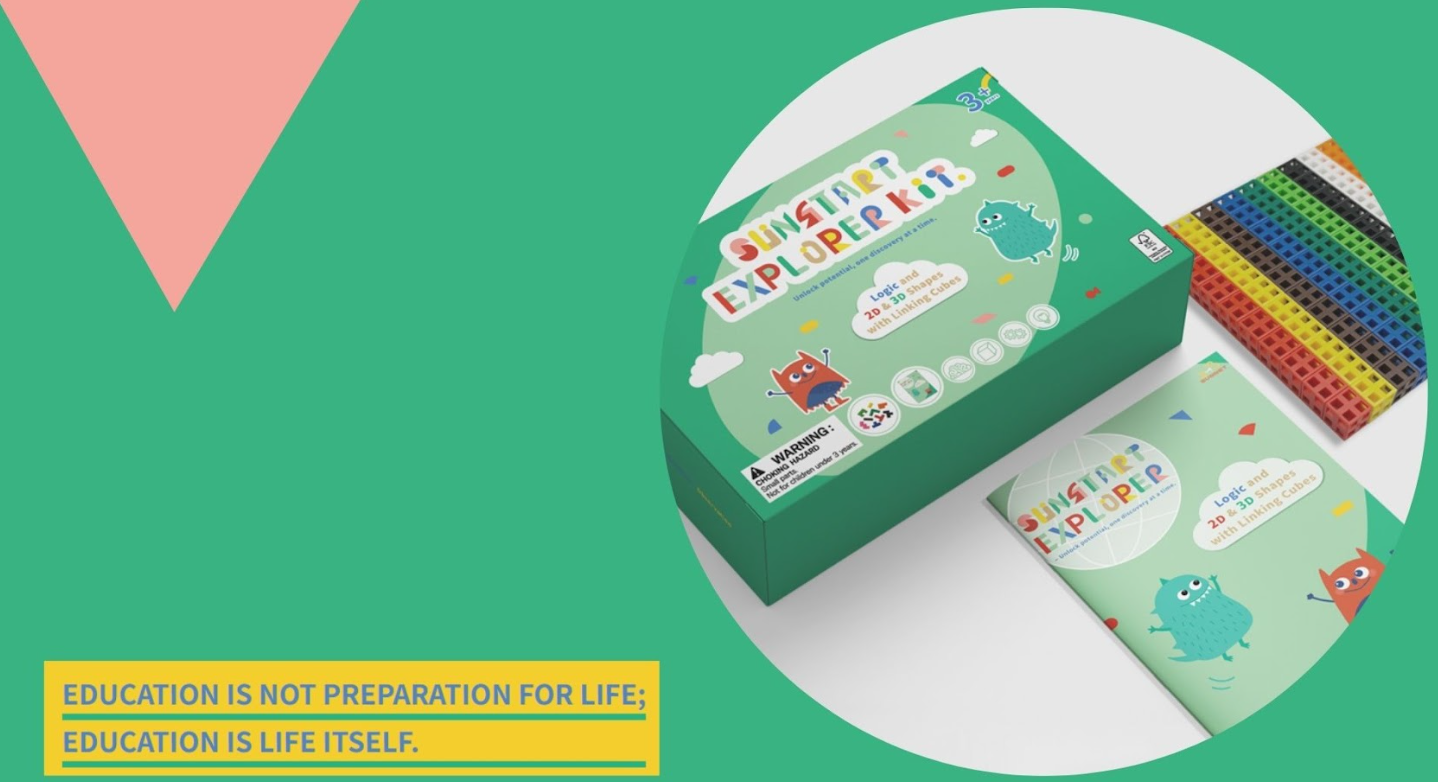
SunStart uses a dual-phase learning cycle to help children move from discovery to understanding.
Children first explore freely through digital courseware, teaching aids, stories, and hands-on activities. Then, with support from parents or teachers, they reflect on what they experienced, express their ideas, and turn discovery into logical thinking.
This method helps children build curiosity, confidence, problem-solving ability, and a positive attitude toward learning.
A Dual-Phase Learning Cycle for Young Thinkers
From Child-Led Exploration to Parent-Child Co-Creation
The SunStart Learning Method is built around two important phases: Child-Led Exploration and Parent-Child Co-Creation.
In the first phase, children are given space to explore before being told the answer. They can observe, try, compare, adjust, and discover patterns through their own actions.
In the second phase, parents or teachers guide children through questions and discussion. This helps children organize their experiences, explain their ideas, and connect what they discovered with math concepts and logical reasoning.
Together, these two phases help children move from hands-on discovery to deeper understanding.
Phase 1: Child-Led Exploration
Letting Curiosity Become the Starting Point of Learning
In Child-Led Exploration, children interact with learning activities before receiving direct explanations.
They explore through digital lessons, visual prompts, stories, and hands-on teaching aids. They can test different ideas, make mistakes, receive feedback, and adjust their thinking.
This phase gives children the opportunity to think independently. Instead of waiting for adults to provide the correct answer, children are encouraged to observe, try, and discover patterns by themselves.
By protecting a child’s natural curiosity, SunStart helps learning begin with exploration rather than pressure.
What Children Do During Exploration
Observe, Try, Compare, Adjust, and Discover
During the exploration phase, children are not passive learners.
They observe visual information, listen to guidance, operate teaching aids, test different solutions, compare results, and make adjustments. These actions help children experience math as something active, concrete, and meaningful.
Through repeated exploration, children gradually learn that mistakes are not failures. Mistakes are opportunities to rethink, adjust, and discover a better solution.
This helps children build resilience, flexibility, and confidence in problem-solving.
Phase 2: Parent-Child Co-Creation
Helping Children Turn Experience into Logical Thinking
In Parent-Child Co-Creation, adults do not simply give answers.
Instead, parents or teachers guide children by asking meaningful questions. They invite children to describe what they noticed, explain how they solved a problem, compare different methods, and think about why something works.
Through this process, scattered experiences become clearer logic. Children gradually learn how to express their thinking, organize their ideas, and connect hands-on discovery with math concepts.
This phase turns learning into a shared discovery between children and adults.
The Role of Parents and Teachers
Guiding Through Questions, Not Pressure
Parents and teachers do not need to be math experts to support children with SunStart.
Their role is to observe, listen, ask questions, and encourage children to explain their ideas. Instead of focusing only on whether an answer is correct, adults help children reflect on how they reached their answer.
Helpful questions may include:
- What did you notice?
- How did you try it?
- What changed when you moved this?
- Why do you think this works?
- Can you find another way?
These questions help children develop expression, reasoning, and confidence.
Digital and Physical Learning Work Together
Bridging Concrete Experience and Abstract Thinking
SunStart combines digital courseware and physical teaching aids to help children understand abstract math concepts.
The digital courseware provides animations, audio, text, images, instant feedback, and learning hints. The teaching aids allow children to build, move, compare, arrange, and test ideas with their hands.
Together, digital and physical learning create a bridge between concrete experience and abstract thinking.
Children do not only watch or memorize. They interact, operate, adjust, and explain.
A Complete Learning Flow
From Story-Based Exploration to Thinking Expression
Each SunStart activity is designed as a complete learning process.
Children begin with a story-based situation that makes learning feel natural and meaningful. Then, they explore through digital interaction and hands-on operation. As they try different solutions, they receive feedback and make adjustments.
After exploration, parents or teachers guide children through discussion, helping them express what they discovered and connect their experience with math and logic.
- Story-Based Situation
- Digital Interaction
- Hands-On Exploration
- Immediate Feedback
- Parent-Child Discussion
- Logical Thinking and Expression
What Children Develop Through This Method
Building Thinking Skills, Learning Habits, and Confidence
The SunStart Learning Method helps children develop more than early math knowledge.
Through repeated cycles of exploration, feedback, discussion, and expression, children build observation, questioning, thinking, expression, creativity, adaptability, resilience, focus, and confidence.
They also develop stronger learning habits, including the ability to try independently, adjust when facing challenges, and explain their own thinking.
The goal is not only to help children get the correct answer, but to help them become curious, confident, and active learners.
Why This Method Matters
Helping Children Learn How to Think
Young children need more than answers. They need opportunities to think.
The SunStart Learning Method gives children time and space to explore first, then helps them organize what they discovered through guided interaction.
This process helps children understand that learning is not about memorizing one correct path. Learning is about observing, trying, adjusting, explaining, and growing.
With SunStart, children do not only learn math. They learn how to think.